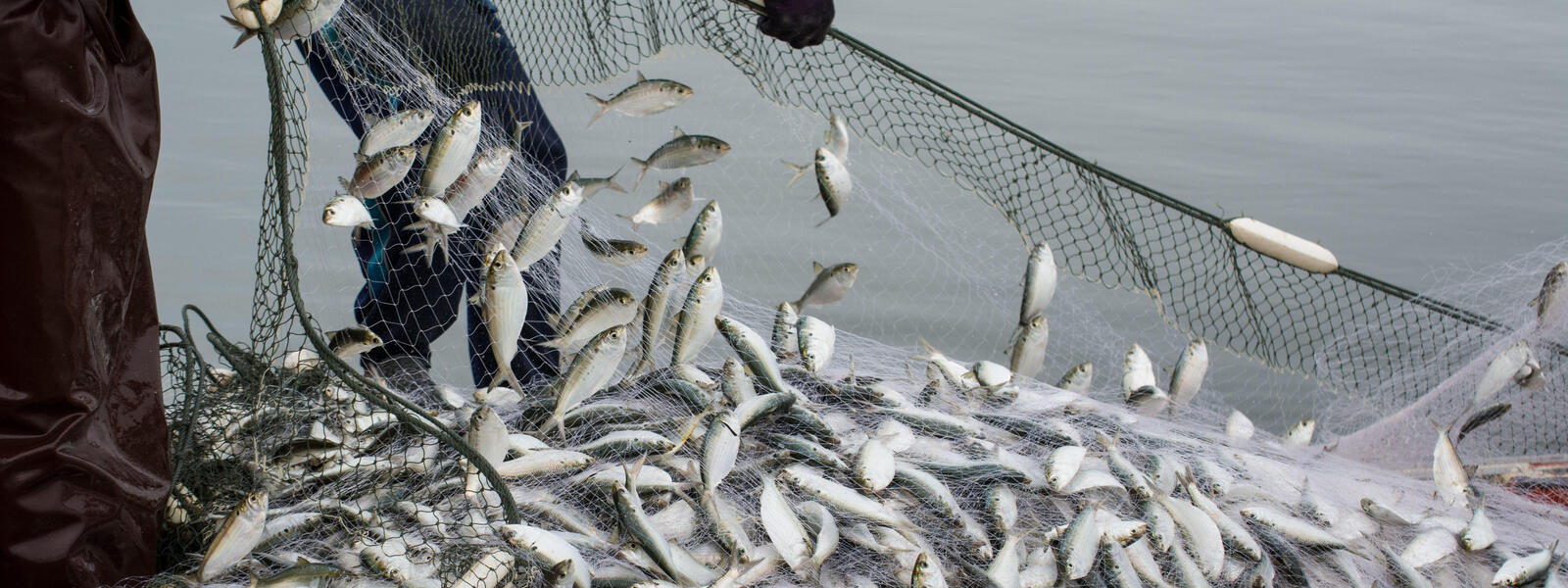
This is a landmark case. Like other Supreme Court cases, the problem might seem small, but the ramifications of this decision could affect our government’s ability to enforce many regulations, including the Food and Drug Administration. The case is called “Relentless v. Department of Commerce” and I hope the Supreme Court will rule against Relentless. Just so you know my feelings!
The Supreme Court’s term is ending in late June or early July, and they always leave the most important cases to the end of the term. As usual, I focus more on the practical aspects of what happens as a result of the ruling, rather than the legal arguments.
— The Case
Fishing is a huge business, and there is always a temptation to overfish, which is to exceed the established quotas for a particular species of fish. It’s simply a risk verses reward situation. It is also a classic case of the regulators (US Government, National Marine Fisheries Service) verses the regulatees (Herring industry).
The problem is undisputable- when more fish are taken than the spawning rate, the population declines. There are multiple solutions, but enforcement is frustratingly difficult given the many species of fish. So the agency decided to enforce quotas by requiring trained inspectors onboard the fishing vessels and pay $700 per day for their services.
I am not sure if this policy is working, but that isn’t for the Supreme Court to decide. I can understand the pushback from the vessels’ owners, particularly the smaller business owners, who claim that the $700/day can make it unprofitable to fish. The Relentless corporation has brought this legal challenge to the Supreme Court as an overreach of a government agency in making rules without the legislature empowering the agency specifically to do so.
I can also imagine how difficult it must be, for fish inspectors to be checking the haul of vessels at the dock, when they are all coming in together. So, putting the inspectors on the vessels made sense.
— The Chevron Deference and Politics
The Chevron deference is part of a ruling, in which the court opined that when ambiguity exists in the enforcement of a law, the court should defer to the judgement of the regulatory agency and just look at whether this is a reasonable interpretation of the agency’s authority. It is based on pragmatism, that the regulatory agency has a better understanding of the problems and potential remedies. It was part of a 1984 Supreme Court decision, and has been narrowed in scope by other court decisions. An excellent summary provided by Cornell law school:
https://www.law.cornell.edu/wex/chevron_deference
I suspect philosophical/ political perspective will have a lot to do with this ruling. The Supreme Court is split, 6 conservatives and 3 liberals, so this might be a win for conservatives. Roberts may join with the liberals. but that won’t be enough to carry the day. Maybe Barrett?
Supreme Court likely to discard Chevron
NY Times, https://www.nytimes.com/2024/01/17/us/supreme-court-chevron-case.html
As I stated at the onset, I hope Relentless loses. The Chevron deference, I believe, is necessary to keep politics out of enforcing unpopular rules. And, the consequences of invalidating the Chevron doctrine will extend far beyond our government’s attempt to regulate the fishing industry. Oral arguments in January indicated Brown, Kagan and Sotomayor will not invalidate the Chevron deference. Thomas, Alito, and Kavanaugh seem to be building a case against this doctrine, as being against free enterprise.
If Relentless wins, it will weaken the hand of government agency to accomplish their areas of responsibility, and in the long term, be bad for the general public. The enforcement of rules is often very difficult, as the risk to reward ratio changes, and owners of businesses see compliance as an option rather than a responsibility.
Yes, there are tons of regulations, but I think in the long run, the Chevron deference benefits everyone. We import 90% of our fish, and if we can’t control overfishing, we have no seat at the table when others are busy diminishing the populations of fish. Same is true for many other areas, such as the environment (yes including climate change), water and air pollution, and safe food and drugs. We depend, like it or not, on the expertise of agencies.
This is an election year, and Donald Trump will champion himself as a great regulation chopper, which will lead to new prosperity. It’s a nice populist theme, particularly for a real estate mogul, with huge legal problems. Perhaps, it isn’t MAGA, but MMGA, or Make Me Great Again.
Stay tuned,
Dave
Other Links related to Overfishing:
New Civil Liberties Alliance: Relentless v. Department of Commerce
Note: The New Civil Liberties Alliance is counsel for the Relentless defendants.
Environmental defense Fund, Overfishing
 news and views